What Happens In A Polar Covalent Bond
The key difference is that polar is a type of covalent bond where atoms share electrons unequally and nonpolar is a type of. Oxygen atoms are red and hydrogen atoms are white.
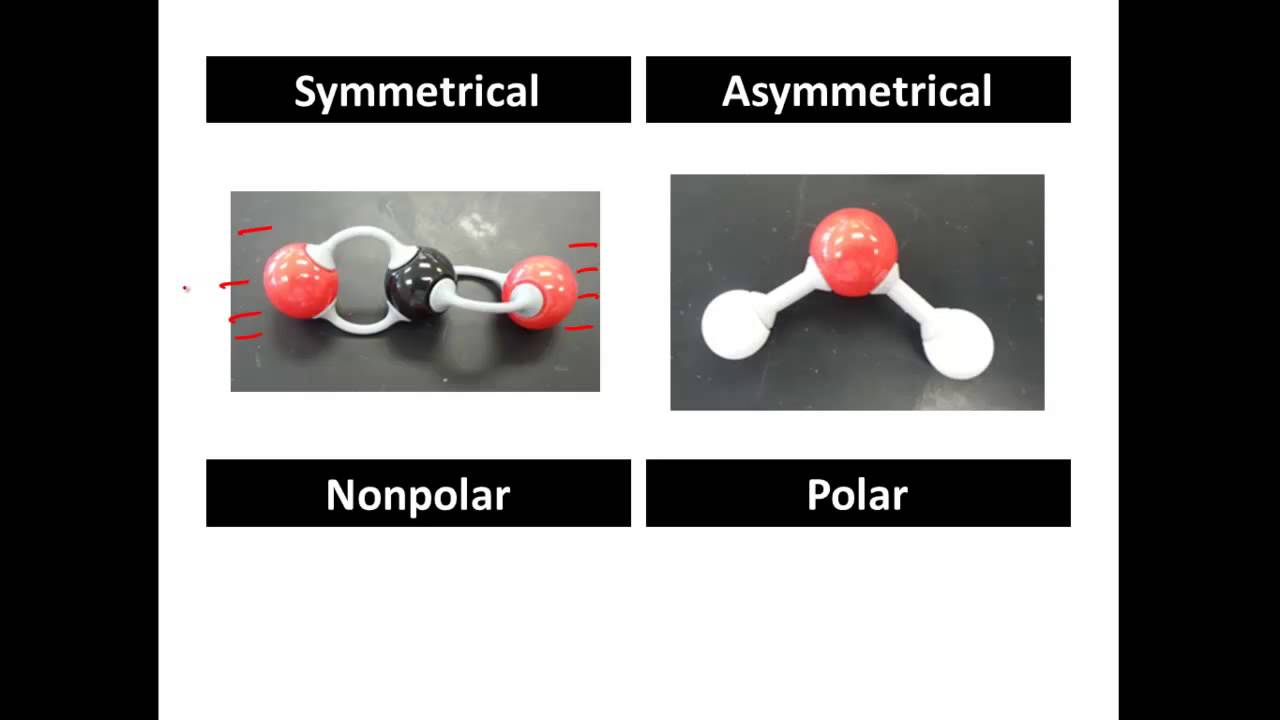
Polar And Non Polar Covalent Molecules Polar Vs Nonpolar Youtube Playlist Science Chemistry Molecules Chemistry
However even this weak bond is strong enough to withstand slight temperature fluctuation.

What happens in a polar covalent bond. Polar molecules occur when two atoms do not share electrons equally in a covalent bondA dipole forms with part of the molecule carrying a slight positive charge and the other part carrying a slight negative charge. Hence there is no charge separation. Polar covalent bonding is a type of chemical bond where a pair of.
A polar bond is a covalent bond in which there is a separation of charge between one end and the other - in other words in which one end is slightly positive and the other slightly negative. The element with the. Cl has an electronegativity of 316 and B has 204.
BCl3 is a non-polar molecule then why does it form polar bonds. Lets go through each. What happens to the polarity of a molecule with a constant functional group such as an alcohol but the number of carbons and hydrogens increases ie.
It takes two electrons to make a covalent bond one from each bonding atom. What dictates which kind of bond will form. The molecule becomes nonpolar with covalent bonds.
Polar bonds are formed when two molecules are created using a covalent bond. One atom loses electrons oxidation while the other one gains electrons reduction. In neither case is a true bond created but the attractions set up a tug-of-war in which the ionic bonds of NaCl and the covalent bonds of H 2 O are both strained.
Paul Andersen explains pH as the power of hydrogen. Covalent bonding is the type of bond that holds together the atoms within a polyatomic ion. A hydrogen bond is a non-covalent molecular interaction.
Then check molarity with the concentration meter. Switch solutes to compare different chemicals and find out how. This figure illustrates the difference between a covalent bond linking an oxygen atom to a hydrogen atom and a hydrogen bond also linking an oxygen to a hydrogen.
As the bond movement formed in BCl3 cancels out itself. Usually it happens in molecules where metallic ions are bonded to ligands. Covalent bonding generally happens between nonmetals.
A polar covalent bond would form in which one of the following pairs of atoms_ The shared electrons spend more time near the oxygen nucleus giving it a small negative charge tha. Covalent bonding typically occurs with nonmetallic atoms and the molecules have a defined shape fixed position. It is about 120th 5 the strength of the covalent bond formed between O-H.
Examples include most covalent bonds. In a polar covalent bond the electrons shared by the atoms spend more time closer to one nucleus than to the other nucleus. Covalent bonds can be a single double or triple bond on the basis of the number of electrons shared among the atoms.
Atoms that carry a charge either positive or negative are called ions and because opposites attract they can form an ionic bond. Since the two oxygen elements have the same electronegativity their difference is 0. Both polar and nonpolar are a type of covalent bond which is where atoms bond by sharing electrons.
Methanol is a polar molecule. See graphic on the left. Of around 03 to 17 When a bond is a polar covalent bond it has an unequal distribution of electrons in the bond and produces a charge separation dipole δ δ-ends.
An extreme difference forms an ionic bond while a lesser. Covalent bonds form in a condition where atoms can share electrons to create molecules. Watch your solution change color as you mix chemicals with water.
Electronegativity values of course. Let us look at this effect through the use of the molecular electrostatic potential. This is described as a polar bond.
Alcohol ethanol is a molecule has both polar and nonpolar parts while oil is completely nonpolar. Basically this happens when two atoms of similar electronegativity come together to make a covalent bond. Because of the unequal distribution of electrons between the different nuclei a slightly positive δ or slightly negative δ charge develops.
He explains how increases in the hydronium ion or hydrogen ion concentration can lower the pH and crea. This unequal sharing also happens with a type of bond called polar covalent bonding. The stronger covalent bonds of water which is also held together generally by hydrogen bonds between water molecules win out and NaCl is pulled apart with the Na and Cl _ ions.
Some other examples of polar molecules are ammonia NH 3 Hydrogen sulfide H 2 S and Sulfur dioxide SO 2. Covalent bonds can form polar or non-polar molecules. This generally happens between two nonmetals and has a weak dipole.
Ionic and covalent bonds are the most important in all of chemistry. For example a carbon-hydrogen bond is weakly polar making it a polar. A hydrogen bond tends to be stronger than van der Waals forces but weaker than covalent bonds or ionic bonds.
These bonds have an electronegativity difference that is greater than zero but less than two. The coordinate covalent bond also known as the dative bond is a type of covalent bond where both electrons are from the same atom. Formation of a permanent dipole polar covalent bond A polar covalent bond forms when the elements in the bond have different electronegativities.
Ionic Bond Covalent Bond James Bond so many bonds. What are all the ways you can change the concentration of your solution. When the difference of the electronegativities of both elements is between 05 and 16.
The formation of an ionic bond is a redox reaction. Electronegativity is probably the most important concept to understand in organic chemistry were going to use the definition that Linus Pauling gives in his book the nature of the chemical bond so Linus Pauling says that electronegativity refers to the power of an atom in a molecule to attract electrons to itself so if I look at a molecule Im going to compare two atoms in that molecule Im. Nonpolar molecules have symmetrically distributed electrons.
Polar Molecules. Figure 23 shows how hydrogen bonds link two water molecules. This is a covalent bond a bond in which atoms share electrons.
In a polar molecule one or more atoms hog the electrons resulting in a partial negative charge at that part balanced by a partial positive charge at other parts. The polar covalent character of water allows its molecules to become attracted to many other different types of molecules and disrupt their pre-existing bonds. BCl3 is a nonpolar molecule yes and the B-Cl bonds are polar due to the electronegativity difference between the elements.
What are Nonpolar Molecules. However it is important to note that the bond formed between two individual water molecules is a hydrogen bond and not covalent. One of the best examples we can provide of a nonpolar covalent bond is the molecule O2.
Polar covalent bonds are formed when you have two atoms with similar but not identical electronegativities. This happens when there is a difference between the electronegativity values of each atom.

Polarity Covalent Bonding 8th Grade Science Class Notes
Chemistry B Sc Level How Many Types Of Chemical Bond In 2021 Chemical Bond Covalent Bonding Electron Configuration

The Hydrogen Atom Has A Positive Charge Well The Oxygen Atom Has A Negative Charge Making The Compound A Covalent Bond And Covalent Bonding Chemistry Molecules

Polar Covalent Bonds Covalent Bonding Teaching Chemistry Chemistry Help

Polar Bond Easy Science Covalent Bonding Chemistry Easy Science

Polar Vs Nonpolar Covalent Bonding Medical Student Study Science Chemistry

Electronegativity Bond Scale Surfguppy Chemistry Made Easy Visual Learning Chemistry Classroom Teaching Chemistry Chemistry

Triple Covalent Bond Covalent Bonding Bond Easy Science

About The Mcat Mcat Chemistry Chemical Reactions Ciencias Quimica Quimica Cine En Casa

Covalent Bond Sharing Of Electrons Between Atoms Bonds Contain Energy And Require Energy To Be Bro Chemistry Education Chemistry Classroom Teaching Chemistry

Difference Between Chemistry Classroom Teaching Chemistry Chemistry Lessons

Polar And Nonpolar Molecules Covalent Bonding Chemistry Lessons Molecules

Four Covalent Bonds Carbon Has Four Valence Electrons And Here A Valence Of Four Each Hydrogen Atom Has One Vale Covalent Bonding Chemical Bond Ionic Bonding

Difference Between Polar Covalent Bond And Non Polar Covalent Bond Covalent Bonding 11th Chemistry Chemistry

H 2 Hydrogen Gas Covalent Bond Bonds In Biology Weak Bonds Hydrogen Bonds Attraction Between And Hydrogen Bond Covalent Bonding Chemistry Basics

Water Has Both A Hydrogen Bond And A Polar Covalent Bond Hydrogen Bond Chemistry Classroom Covalent Bonding

Electron Configurations The Periodic Table Chemistry Classroom Teaching Chemistry Chemistry Education

Difference Between Polar And Nonpolar Molecules Definition Formation Properties Examples Covalent Bonding Study Chemistry Chemical Bond

Definition And Examples Of A Polar Bond In Chemistry Covalent Bonding Chemistry Chemical Bond